
- Why People Are Exploring ChatGPT Alternatives in 2026
- Best ChatGPT Alternatives to Try This Year
- 1. Claude
- 2. Google Gemini
- 3. Microsoft Copilot
- 4. Perplexity AI
- 5. Jasper
- 6. Writesonic
- 7. You.com
- 8. GitHub Copilot
- 9. Poe
- How to Choose Among ChatGPT Alternatives
- Final Thoughts on ChatGPT Alternatives
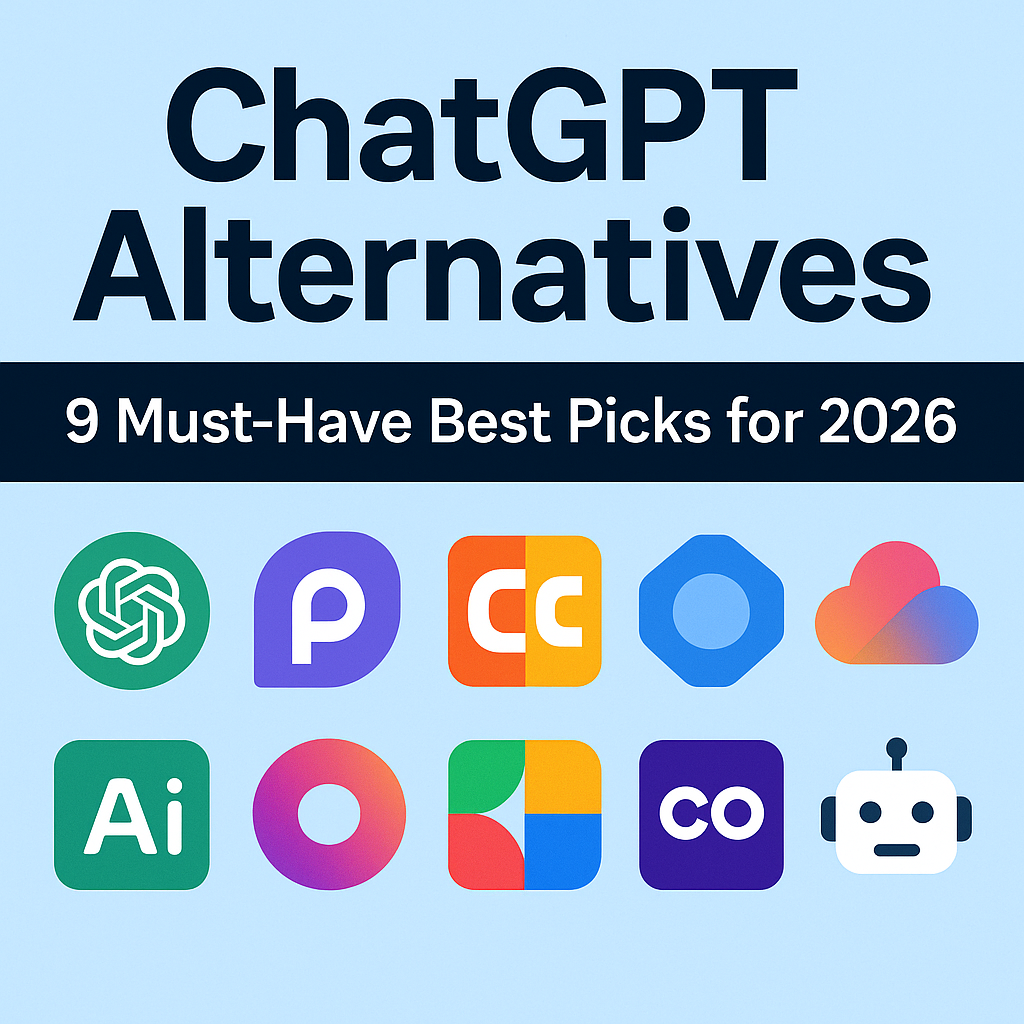
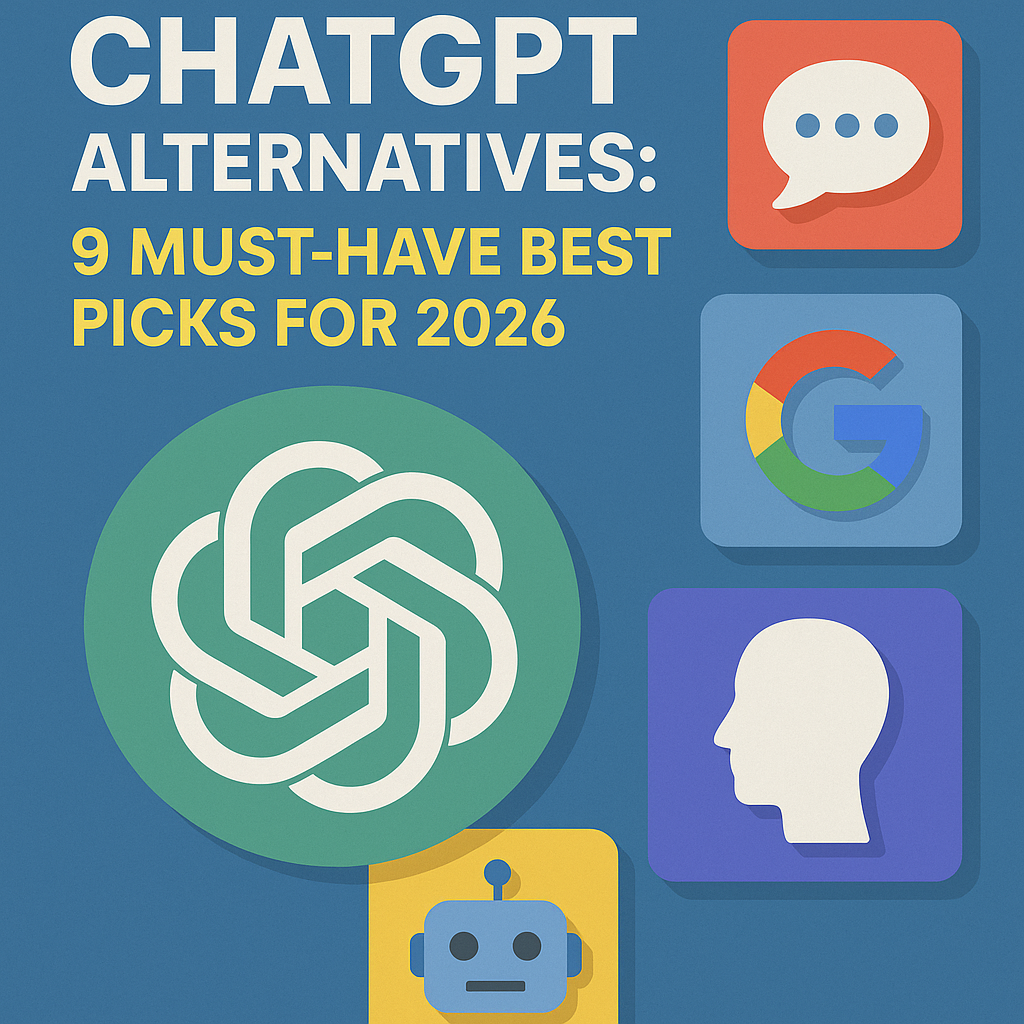
ChatGPT Alternatives: 9 Must-Have Best Picks for 2026
ChatGPT alternatives are no longer just backup tools—they’ve become powerful AI platforms in their own right, each offering unique strengths for writing, research, coding, customer support, brainstorming, and business automation. As AI adoption grows in 2026, many users are looking beyond a single platform to find tools that better match their workflow, budget, privacy requirements, or preferred style of output.
Whether you’re a marketer creating content at scale, a developer seeking a coding assistant, a student doing research, or a business team building AI into daily operations, choosing the right assistant can make a major difference. Some platforms excel at long-form writing, while others stand out for speed, multimodal features, enterprise security, or integration with productivity tools.
In this guide, we’ll look at nine standout options worth considering this year, along with what makes each one useful.
Why People Are Exploring ChatGPT Alternatives in 2026
The AI space has become more competitive and specialized. Users are exploring new tools for several reasons:
– Different strengths: Not every assistant is equally good at writing, coding, summarizing, or data analysis.
– Cost flexibility: Some tools offer more generous free plans or lower pricing for teams.
– Better integrations: Many users want AI that connects directly with email, docs, CRMs, or development environments.
– Privacy and compliance: Businesses often need stronger controls over how data is processed and stored.
– Multimodal capabilities: Image understanding, voice interaction, file handling, and live web access are now major deciding factors.
The best choice depends less on hype and more on how you actually work.
Best ChatGPT Alternatives to Try This Year
1. Claude
Claude has become a favorite for users who want thoughtful, well-structured responses and strong long-context performance. It’s especially useful for summarizing lengthy documents, drafting emails, analyzing reports, and handling nuanced writing tasks.
Why it stands out:
– Excellent with long files and large text inputs
– Clear, natural writing style
– Strong performance for analysis and summarization
– Helpful for professional and academic tasks
Claude is often chosen by users who value polished language and deeper contextual understanding.
2. Google Gemini
Gemini is a strong pick for anyone already using Google Workspace. Its integration with tools like Gmail, Docs, Sheets, and Drive makes it practical for everyday productivity.
Best for:
– Research and information synthesis
– Workspace-based collaboration
– Drafting and editing documents
– Spreadsheet and data-related assistance
If your workflow lives inside Google’s ecosystem, Gemini can be a very efficient assistant.
3. Microsoft Copilot
Microsoft Copilot is ideal for business users and professionals who rely on Windows, Microsoft 365, Teams, Word, Excel, and PowerPoint. It’s designed to bring AI directly into familiar workplace tools.
Key strengths:
– Strong integration with Microsoft apps
– Great for presentations, reports, and email drafting
– Useful in enterprise environments
– Helpful for meeting summaries and productivity tasks
For organizations already invested in Microsoft infrastructure, Copilot can feel less like an extra tool and more like a natural extension of existing software.
4. Perplexity AI
Perplexity AI is one of the top choices for users who need fast, source-backed answers. Instead of just generating responses, it focuses heavily on search, citations, and real-time web-based information.
Why users like it:
– Provides links and references
– Great for research and fact-finding
– Fast and easy to use
– Helpful for comparing viewpoints across sources
If you often ask questions that require up-to-date information, Perplexity is a smart option.
5. Jasper
Jasper remains a strong AI platform for marketing teams, agencies, and brands that need content creation at scale. It’s designed with business use cases in mind, especially copywriting and campaign production.
Best use cases:
– Blog writing
– Ad copy and landing pages
– Brand voice consistency
– Marketing workflows
Jasper is less of a general assistant and more of a specialized content engine, which makes it especially valuable for growth-focused teams.
6. Writesonic
Writesonic offers a versatile set of AI writing and productivity features. It appeals to users who want content generation, SEO support, and chatbot-style interaction in one platform.
Highlights:
– Blog and article generation
– SEO-friendly content support
– Marketing copy creation
– User-friendly interface
For freelancers, content teams, and small businesses, Writesonic can offer a practical balance of features and affordability.
7. You.com
You.com blends AI chat with search, personalization, and app-like functionality. It’s a useful choice for people who want more control over how results are generated and displayed.
What makes it interesting:
– Combines search and AI responses
– Offers customizable experiences
– Supports productivity and research tasks
– Good for users who want flexible AI interaction
It’s especially appealing to those who want more than a standard chatbot experience.
8. GitHub Copilot
For developers, GitHub Copilot continues to be one of the most valuable AI tools available. While it’s not aimed at general conversation in the same way some other assistants are, it’s incredibly effective for coding workflows.
Ideal for:
– Code suggestions and autocompletion
– Learning new programming patterns
– Reducing repetitive coding tasks
– Supporting faster development inside editors
If your main goal is writing, debugging, or understanding code, GitHub Copilot deserves serious attention.
9. Poe
Poe offers something different: access to multiple AI models in one place. Instead of committing to a single assistant, users can switch between models depending on the task.
Benefits include:
– Access to different AI personalities and strengths
– Good for experimentation
– Convenient for users comparing outputs
– Flexible interface for casual and power users
Poe is a strong choice for people who like testing multiple tools before deciding which one fits best.
How to Choose Among ChatGPT Alternatives
With so many options available, it helps to evaluate tools based on your actual needs rather than general popularity. Ask yourself:
– Do you need better research or better writing?
– Are you working solo, or do you need team collaboration features?
– Is real-time web access important?
– Do you need AI for coding, content marketing, or office productivity?
– How important are privacy, compliance, and admin controls?
For example:
– Choose Perplexity for research.
– Choose Claude for long-form analysis and writing.
– Choose Copilot or Gemini for productivity ecosystems.
– Choose GitHub Copilot for software development.
– Choose Jasper or Writesonic for marketing content.
Final Thoughts on ChatGPT Alternatives
The market for AI assistants in 2026 is broader, smarter, and more specialized than ever before. The good news is that you no longer have to settle for a one-size-fits-all experience. The right platform depends on what you want AI to do for you every day.
Some users will prioritize accuracy and citations. Others will care more about creativity, speed, coding help, or business integration. The best approach is to test a few of these tools with real tasks—writing an article, summarizing a document, generating code, or planning a campaign—and see which one consistently delivers the results you need.
As AI keeps evolving, having a shortlist of reliable options can give you more flexibility, better output, and a toolset that actually supports the way you work.